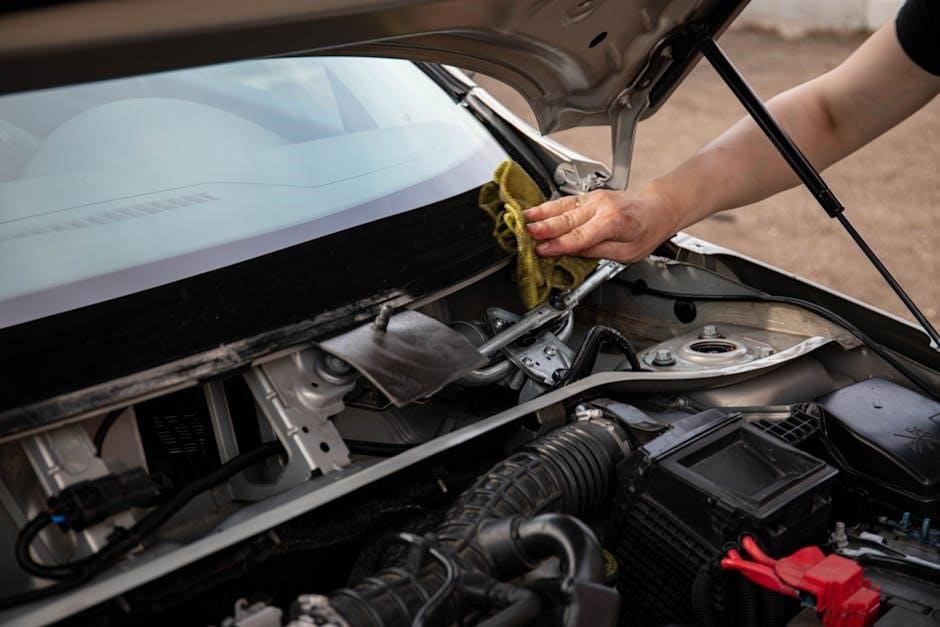
Honda Element Service Manual: A Comprehensive Guide
This detailed manual provides essential repair information, diagnostic procedures, and maintenance schedules for your Honda Element vehicle, ensuring longevity and performance.
The Honda Element, produced from 2003 to 2011, was a uniquely designed compact crossover SUV celebrated for its practicality and versatility. Departing from conventional SUV aesthetics, the Element boasted a boxy shape, durable plastic interior surfaces, and rear-hinged side doors – features geared towards active lifestyles and ease of cleaning.
Initially marketed towards outdoor enthusiasts, surfers, and those needing a vehicle capable of handling messy cargo, the Element quickly gained a loyal following. Its spacious interior, configurable seating, and water-resistant materials made it ideal for transporting gear and accommodating various needs.
Despite its relatively short production run, the Honda Element remains a popular choice for its distinctive character and reliability. This service manual is dedicated to assisting owners and mechanics in maintaining and repairing these exceptional vehicles, ensuring they continue to provide years of dependable service. Understanding its unique features is key to effective maintenance.
Why a Service Manual is Essential
Attempting repairs on a Honda Element without a dedicated service manual can lead to costly mistakes and potentially compromise vehicle safety. Modern vehicles, like the Element, incorporate complex systems requiring specific procedures and torque specifications for proper function.
This manual provides step-by-step instructions, detailed diagrams, and crucial technical data, empowering both experienced mechanics and DIY enthusiasts to tackle maintenance and repairs confidently. It eliminates guesswork, ensuring tasks are completed correctly the first time, saving time and money.
Furthermore, a service manual offers invaluable troubleshooting guidance, helping to accurately diagnose issues and avoid unnecessary parts replacements. Access to wiring diagrams and fluid capacity charts is also essential. Investing in this manual is investing in the longevity and reliable operation of your Honda Element, protecting your investment and ensuring peace of mind.

Understanding Your Honda Element
Familiarizing yourself with your Element’s unique features, identification details, and core components is vital for effective maintenance and informed repairs.
Vehicle Identification Numbers (VIN) & Decoding
The Vehicle Identification Number (VIN) is a unique 17-character code assigned to every Honda Element. Locating the VIN is crucial for identifying your specific vehicle, ordering correct parts, and verifying its history. You’ll find it on the driver’s side dashboard, visible through the windshield, and on your vehicle’s registration and insurance documents.
Decoding the VIN reveals valuable information about your Element. The first three characters identify the manufacturer (Honda), the next five indicate the model and body style (Element), and subsequent characters detail the engine type, assembly plant, and model year. Understanding these codes allows you to pinpoint specific features and specifications of your vehicle.
Online VIN decoders are readily available and can provide a comprehensive report based on your Element’s VIN. These reports often include factory options, recall information, and potential title issues. Always verify information from these sources with official Honda documentation when possible.
Engine Specifications & Overview (2.4L i-VTEC)
The Honda Element primarily utilizes a 2.4-liter, inline-4 cylinder engine equipped with Honda’s innovative i-VTEC (Variable Valve Timing and Lift Electronic Control) technology. This engine, designated as the K24A4, delivers a balance of power and fuel efficiency, producing approximately 166 horsepower and 161 lb-ft of torque.
Key specifications include a cast-iron block, aluminum cylinder head, and a 10.5:1 compression ratio. The i-VTEC system optimizes valve timing based on engine speed and load, enhancing performance across the RPM range. Regular maintenance, including oil changes and spark plug replacements, is vital for maintaining optimal engine performance.
Understanding the engine’s layout and components is essential for effective troubleshooting and repair. This section will detail the engine’s internal workings, including the valve train, fuel injection system, and ignition system, providing a solid foundation for more complex procedures.
Transmission Options & Details (Automatic & Manual)
The Honda Element was offered with two transmission choices: a 5-speed automatic transmission and a 5-speed manual transmission. The automatic transmission (model MGA) provides smooth shifting and convenience, utilizing a torque converter for enhanced low-speed performance. The manual transmission (model TSX) offers drivers greater control and a more engaging driving experience.
Both transmissions are designed for durability and reliability, but require specific maintenance procedures. Automatic transmissions necessitate regular fluid checks and changes to ensure proper lubrication and cooling. Manual transmissions require periodic clutch adjustments and gear oil replacements.
This section details the internal components of each transmission, including gear ratios, clutch mechanisms (for manual transmissions), and hydraulic systems (for automatic transmissions). Proper diagnosis and repair of transmission issues require a thorough understanding of these systems, covered extensively herein.
The Honda Element features several key systems crucial for its functionality and requiring detailed attention during service. These include the Multi-Function Center Console, a unique and versatile storage solution; the rear tailgate, offering wide access and a water-resistant interior; and the Vehicle Stability Assist (VSA) system, enhancing safety and control.
The engine management system, utilizing a sophisticated ECU, controls fuel injection, ignition timing, and emissions. The braking system incorporates Anti-lock Braking System (ABS) and Electronic Brake-force Distribution (EBD) for optimal stopping power. The electrical system powers numerous components, including the audio system, power windows, and lighting.
This manual provides in-depth coverage of each system, outlining component locations, operating principles, and diagnostic procedures. Understanding these systems is fundamental for effective maintenance and repair of your Honda Element.

Maintenance Procedures
Regular maintenance is vital for Honda Element reliability. This section details essential procedures, from fluid checks to component replacements, ensuring peak performance and longevity.
Scheduled Maintenance Charts & Intervals
Maintaining your Honda Element according to the recommended schedule is crucial for its long-term health and reliability. This section provides detailed charts outlining service intervals based on mileage and time. We cover both normal and severe driving conditions, as severe conditions – such as frequent short trips, towing, or driving in dusty environments – require more frequent servicing.
Charts are presented for easy reference, specifying tasks like oil and filter changes, tire rotations, fluid inspections (coolant, brake fluid, transmission fluid, power steering fluid), air filter replacement, spark plug replacement, and drive belt inspections. Following these intervals helps prevent costly repairs down the road and ensures your Element operates at its optimal efficiency. Adherence to the manufacturer’s recommendations also protects your vehicle’s warranty.
Oil Change Procedure (Engine Oil & Filter)
Regular oil changes are paramount for engine longevity. This procedure details a step-by-step guide to changing the engine oil and oil filter on your Honda Element. First, warm up the engine slightly; Then, locate the oil drain plug and oil filter. Position a drain pan beneath the drain plug, and carefully remove it, allowing the old oil to drain completely.
Next, remove the old oil filter using an oil filter wrench. Lightly lubricate the gasket of the new oil filter with fresh oil and hand-tighten it into place. Reinstall the drain plug with a new crush washer, torquing it to the specified value. Finally, add the correct amount of new oil (refer to fluid capacities) and check the oil level with the dipstick. Dispose of the used oil responsibly.
Coolant Flush & Replacement
Maintaining the cooling system is crucial to prevent overheating. This guide details a coolant flush and replacement for your Honda Element. Begin by allowing the engine to cool completely. Locate the radiator drain cock and engine block drain plugs. Position a drain pan underneath and open the drain cock and drain plugs to fully drain the old coolant.
Next, close the drains and flush the system with distilled water until it runs clear. Then, mix the correct coolant and distilled water ratio (refer to fluid capacities). Slowly fill the cooling system, burping any air pockets. Finally, check the coolant level in the radiator and overflow reservoir. Proper disposal of used coolant is essential due to its toxicity.

Brake System Inspection & Service
Regular brake system maintenance is paramount for safety. This section covers inspection and service procedures for your Honda Element’s brakes. Begin with a visual inspection of brake lines for leaks or damage. Check brake pad thickness; replace if worn below the minimum specification. Inspect rotors for scoring, warping, or excessive wear – resurfacing or replacement may be needed.
Next, examine brake calipers for leaks and proper operation. Bleed the brake system to remove air bubbles, ensuring a firm pedal feel. Check the brake fluid level and condition; flush and replace if contaminated. Lubricate caliper slide pins. Always follow torque specifications when reassembling. Test the parking brake for proper engagement. A properly maintained brake system is vital for safe operation.
Tire Rotation, Balancing & Alignment
Maintaining proper tire condition extends tire life and optimizes vehicle handling. This section details tire rotation, balancing, and wheel alignment procedures for your Honda Element. Rotate tires according to the recommended pattern (typically front to back) to ensure even wear. Inspect tires for uneven wear patterns, indicating potential alignment issues.
Wheel balancing eliminates vibrations and ensures smooth driving. Use a wheel balancer to identify and correct imbalances by adding weights. Alignment ensures wheels point in the correct direction, preventing pulling and premature tire wear. Check alignment angles (camber, caster, toe) with specialized equipment. Adjust as needed to factory specifications. After alignment, perform a test drive to verify proper handling. Regular maintenance improves safety and fuel efficiency.

Component Removal & Installation
This section details step-by-step instructions for removing and installing major Honda Element components, emphasizing safety and proper torque specifications for reliability.
Engine Removal & Installation
This comprehensive guide outlines the complete process of removing and reinstalling the 2.4L i-VTEC engine from your Honda Element. It begins with preparatory steps, including disconnecting the battery, draining fluids (coolant, oil, and transmission fluid), and labeling all wiring harnesses and vacuum lines.
Detailed instructions cover removing the air intake system, fuel lines, exhaust manifold, and all associated engine accessories. Specific torque specifications are provided for each fastener. The procedure then details supporting the engine with an engine hoist and carefully lifting it from the engine bay.
Installation is presented as the reverse of removal, with critical attention paid to aligning the engine with the transmission and motor mounts. Final checks include reconnecting all fluids, wiring, and verifying proper operation before starting the engine. Safety precautions are emphasized throughout.

Transmission Removal & Installation
This section provides a step-by-step guide for removing and reinstalling both the automatic and manual transmissions found in the Honda Element. It begins with disconnecting the shift linkage (or shift cables), driveshafts, and all electrical connectors. Support the transmission securely with a transmission jack before proceeding.
Detailed instructions cover removing the starter, flexplate (automatic), and bellhousing bolts. The procedure emphasizes the importance of carefully lowering the transmission to avoid damaging the engine or surrounding components. Specific torque specifications are listed for all fasteners.
Reinstallation involves aligning the transmission with the engine, installing the bellhousing bolts, and reconnecting all driveshafts, linkages, and electrical connections. Final steps include filling the transmission with the correct fluid and verifying proper operation. Safety is paramount throughout this process.
Suspension System: Shock & Strut Replacement
This guide details the replacement of shocks and struts on the Honda Element, covering both front and rear suspension components. It begins with safely lifting the vehicle and supporting it with jack stands. Disconnect the ABS sensors and brake lines (taking care not to damage them) before proceeding with component removal.
Instructions cover removing the strut assembly or shock absorber, including fasteners and retainers. Special tools, such as a spring compressor, are required for strut disassembly and re-assembly – safety precautions are emphasized. Detailed diagrams illustrate the correct orientation of components.
Reinstallation involves compressing the spring (if applicable), re-assembling the strut, and installing it back into the vehicle. Torque specifications for all fasteners are provided. Final steps include reconnecting the brake lines, ABS sensors, and performing a wheel alignment.
Brake Caliper & Rotor Replacement
This section provides a step-by-step guide for replacing brake calipers and rotors on your Honda Element. Begin by safely lifting the vehicle and removing the wheel assembly. Disconnect the brake hose from the caliper, taking precautions to prevent fluid loss and air entry into the system. Support the caliper to avoid stressing the brake line.
Instructions detail removing the caliper mounting bolts and lifting the caliper off the rotor. Remove the rotor, noting any retaining screws. Inspect the brake lines for damage. Clean the hub surface before installing the new rotor.
Reinstallation involves mounting the new caliper, connecting the brake hose, and bleeding the brake system to remove any air. Torque specifications for all fasteners are crucial. Final checks include testing the brakes and verifying proper operation.
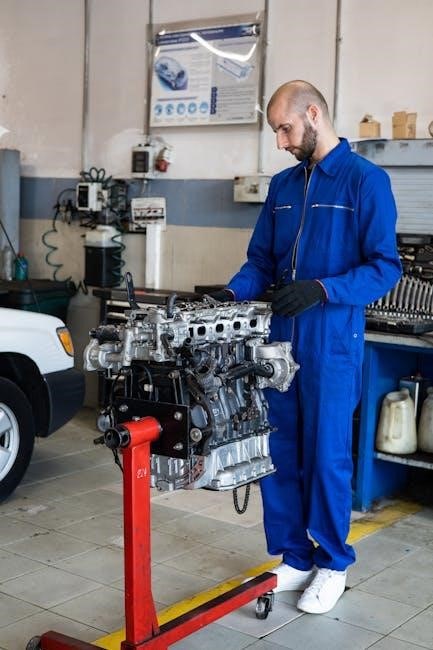
Troubleshooting & Diagnostics
Effective diagnosis relies on systematic testing, OBD-II scans, and interpreting fault codes to resolve issues within your Honda Element efficiently.
Using the OBD-II System & Scan Tools
The Honda Element utilizes the On-Board Diagnostics II (OBD-II) system, a standardized interface for accessing vehicle data and diagnostic trouble codes (DTCs). Locating the OBD-II port is the first step; it’s typically found under the dashboard, near the steering column.
Scan tools, ranging from basic code readers to advanced diagnostic platforms, connect to this port. A basic code reader will display stored DTCs, allowing you to identify potential problem areas. More sophisticated scan tools offer live data streaming, enabling you to monitor sensor readings in real-time – crucial for pinpointing intermittent issues.
Interpreting DTCs requires referencing a repair manual or online database specific to the Honda Element. Codes provide a starting point, but further investigation, including visual inspections and component testing, is often necessary. Remember to clear the codes after repairs to verify the fix and ensure the malfunction indicator lamp (MIL) turns off.
Common Engine Issues & Solutions
Honda Element engines, while reliable, can experience certain recurring issues. Misfires, often caused by faulty spark plugs, ignition coils, or fuel injectors, are common. Diagnose with a scan tool and replace the defective component. Excessive oil consumption can indicate worn piston rings or valve seals – a more complex repair.
Rough idling may stem from a dirty throttle body or vacuum leaks; cleaning the throttle body and inspecting vacuum lines are good starting points; Check Engine Light illumination frequently points to a loose gas cap, but don’t dismiss more serious sensor failures (O2 sensors, MAF sensor).
Catalytic converter failure, signaled by a specific DTC, can occur due to prolonged misfires or oil consumption. Finally, listen for unusual noises – valve train noise might indicate low oil levels or worn components. Always consult the service manual for specific diagnostic procedures and torque specifications.
Electrical System Diagnostics
Diagnosing electrical faults in the Honda Element requires a systematic approach. Begin with a visual inspection for damaged wiring, corroded connectors, and blown fuses. Utilize a digital multimeter to check for voltage, continuity, and resistance. The Element’s integrated systems – power windows, locks, and the audio system – often share common grounds, so verify ground connections first.
Scan tool diagnostics are crucial for retrieving Diagnostic Trouble Codes (DTCs) related to sensors and actuators. Pay close attention to the Body Control Module (BCM) as it controls many electrical functions. Testing relays is essential; a faulty relay can cause intermittent issues.
Wiring diagrams (see Appendix) are indispensable for tracing circuits. Common problems include failing door switches, malfunctioning power window motors, and issues with the immobilizer system. Remember to disconnect the negative battery terminal before working on any electrical component to prevent shorts and damage.
Transmission Problem Diagnosis
Diagnosing transmission issues in the Honda Element begins with a thorough fluid level check – low fluid is a common culprit. Note the fluid’s color and smell; burnt fluid indicates internal damage. Scan tool diagnostics are vital for retrieving DTCs related to the transmission control module (TCM) and solenoids.
Symptoms like slipping gears, harsh shifting, or failure to engage require further investigation. Check for external leaks around the transmission housing and cooler lines. A road test while monitoring transmission behavior is crucial. Listen for unusual noises during gear changes.
Internal diagnosis may necessitate pressure testing and disassembly. Common problems include failing solenoids, worn clutch packs (automatic transmissions), and damaged synchronizers (manual transmissions). Always refer to the torque specifications (see Appendix) when reassembling the transmission. Proper fluid type (see Appendix) is critical for optimal performance.

Appendices & Resources
Essential supplementary data, including wiring schematics, torque values, and fluid specifications, are provided to facilitate accurate Honda Element repairs and maintenance.
Wiring Diagrams Overview
Understanding the Honda Element’s electrical system relies heavily on accurate wiring diagrams. This section provides a foundational overview, explaining diagram conventions – color codes, connector views, and component locations. Diagrams are organized by system: power supply, ignition, charging, starting, lighting, instrumentation, audio, climate control, and safety features like airbags and ABS.
Each diagram details wire gauges, circuit protection (fuses and relays), and grounding points. Special attention is given to the CAN bus system utilized for communication between various modules. Troubleshooting electrical faults requires tracing circuits using these diagrams, identifying breaks, shorts, or open connections. Proper use of a multimeter is crucial for verifying voltage, continuity, and resistance. Always disconnect the negative battery terminal before working on electrical components to prevent shorts and damage. Diagrams are cross-referenced with component locations for ease of use.
Torque Specifications Chart
Proper torque application is critical for reliable Honda Element repairs. This chart details precise torque values for all fasteners, categorized by component and size. Values are listed in both ft-lbs (foot-pounds) and Nm (Newton-meters) for convenience. Sections include engine components (cylinder head bolts, connecting rod bolts, main bearing caps), transmission fasteners, suspension parts (strut bolts, control arm bolts, sway bar links), brake system components (caliper bolts, rotor bolts), and chassis fasteners.
Using a calibrated torque wrench is essential; never rely on “feel.” Over-tightening can strip threads or damage components, while under-tightening can lead to loosening and failure. Always refer to this chart before tightening any fastener. Note any specific tightening sequences indicated for multi-bolt assemblies, such as cylinder heads. Regularly check your torque wrench’s calibration to ensure accuracy. Ignoring torque specifications can compromise safety and vehicle performance.
Fluid Capacities & Types
Maintaining correct fluid levels is vital for optimal Honda Element operation. This section details the required fluid types and capacities for all systems. Engine oil capacity is listed for both oil filter-included and excluded scenarios, specifying the recommended viscosity grade (typically 5W-20). Transmission fluid specifications (Honda ATF-DW1) and capacity are provided for both automatic and manual transmissions.
Coolant capacity (Honda Long Life Antifreeze/Coolant Type 2) is given, along with brake fluid (DOT 3) and power steering fluid (Honda PSF-2) specifications. Differential fluid (SAE 75W-90) capacity is also included. Always use the specified fluid types; substitutions can cause damage. Refer to this chart before any fluid service. Note that capacities may vary slightly depending on specific equipment or modifications. Proper fluid levels ensure smooth operation and prevent premature wear.